
Maori All Blacks: The Cultural Legacy and Modern Evolution of Indigenous New Zealand Rugby

Maori All Blacks: The Cultural Legacy and Modern Evolution of Indigenous New Zealand Rugby

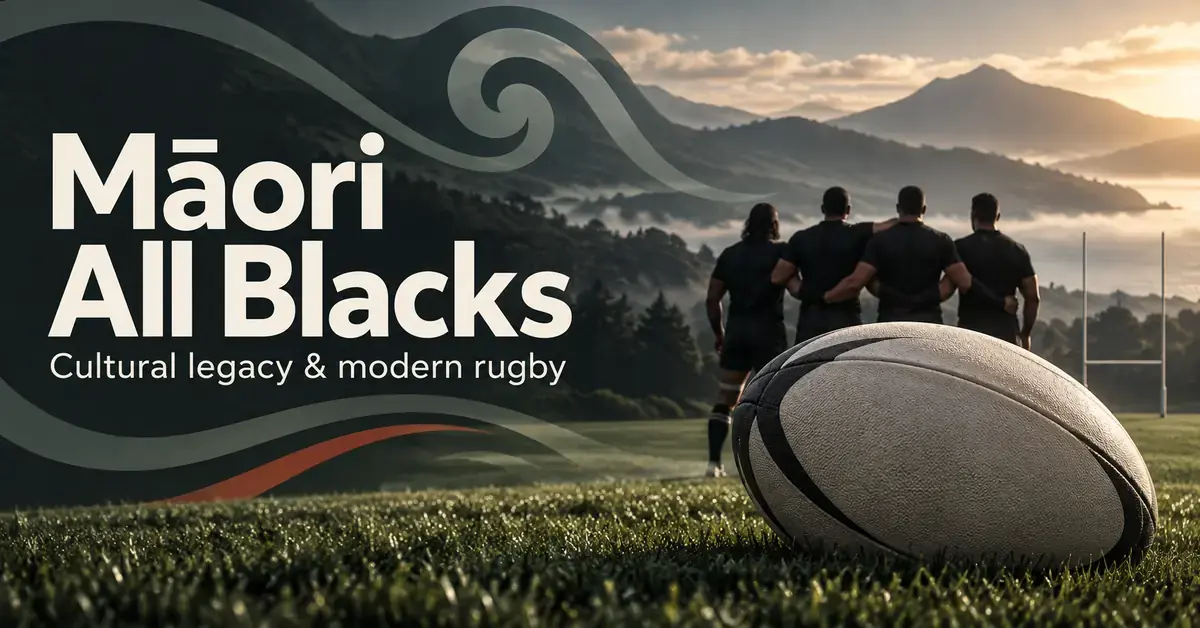
The Maori All Blacks represent one of the most culturally significant and historically rich institutions in global sport, serving as a powerful symbol of indigenous pride, high-performance rugby excellence, and cultural identity within Aotearoa New Zealand. Unlike standard representative sides whose selection parameters are defined strictly by regional boundaries or national residency rules, this unique team requires all selected players to possess verified Māori whakapapa (genealogy).

Administered under the official umbrella of New Zealand Rugby in close partnership with the New Zealand Māori Rugby Board, the side functions simultaneously as an elite development pathway for high-performance athletes and a fierce competitive entity capable of toppling tier-one international nations. From its early iterations in the late nineteenth century to the high-stakes professional fixtures of the modern era, the team has consistently showcased a fluid, expansive style of rugby that mirrors the passion and creativity embedded within Māori sporting traditions.

  • Whakapapa Prerequisite: Every individual chosen for the side must have their Māori ancestry officially verified through recognized tribal lineages.
  • Elite Talent Conduit: The team serves as a critical stepping stone for Super Rugby players transitioning into the senior national team.
  • Global Ambassadors: Beyond sporting achievements, the side acts as a cultural envoy, presenting the unique heritage of Aotearoa to international audiences.
  • Fierce Competitors: With historical victories over the British and Irish Lions, Ireland, England, and the Springboks, they maintain a world-class standard of play.

The Historic Foundations of the NZ Maori All Blacks

The origins of the nz maori all blacks are deeply intertwined with the very introduction of rugby union to the shores of New Zealand. Long before the official establishment of centralized national teams, indigenous athletes embraced the physical and strategic demands of the sport, finding immediate alignment with traditional games that emphasized strength, speed, and collective coordination. The formalization of a dedicated indigenous representative side provided Māori communities with a platform to assert their cultural identity during a period of intense colonial transition. This historical foundation established a precedent where rugby was not merely a recreational pursuit, but a vehicle for social visibility and athletic self-determination. Over successive generations, this sporting lineage has been meticulously preserved, ensuring that every time the modern squad takes the field, they carry the weight and aspirations of a century-long tradition of indigenous sporting excellence.

EraKey Historical MilestoneCultural and Sporting Impact
1888Formation of the New Zealand Native Football TeamEstablished the precedent for international touring and introduced the iconic black jersey.
1910Official sanctioning of the New Zealand Māori teamCentralized the team under union governance, creating a formal pathway for indigenous talent.
1926Comprehensive tour of Europe and the Northern HemisphereValidated the world-class caliber of Māori rugby on the global stage.
2012Official rebranding to the Māori All BlacksAligned the team identity with the global All Blacks brand while preserving distinct cultural autonomy.

The Pioneering Tour of the New Zealand Natives

The true catalyst for this iconic sporting lineage occurred between 1888 and 1889, when the New Zealand Native Football Team embarked on an extraordinary, grueling tour of Great Britain, Australia, and New Zealand. Organized initially as a private commercial venture by player Joe Warbrick and businessman Thomas Eyton, this pioneering squad became the first representative rugby side from New Zealand to tour the northern hemisphere. Playing an astonishing 107 matches over a period of 14 months, the team faced severe physical exhaustion and logistical hurdles, yet achieved a remarkable record of victories that stunned traditional British rugby establishments. The tour fundamentally demonstrated the tactical ingenuity and physical prowess of indigenous New Zealand players, laying the structural and conceptual groundwork for all subsequent national touring sides.

  • Unprecedented Schedule: The squad played 107 matches globally, establishing a record for endurance that remains unmatched in modern sports history.
  • Tactical Innovation: Introduced advanced positional play and rapid ball-recycled strategies that transformed early rugby conventions.
  • Financial Autonomy: Operated as a self-funded venture, proving the commercial viability of international rugby tours.
  • Cultural Revelation: Exposed northern hemisphere audiences to the haka and indigenous customs for the very first time.

Strict Eligibility and the Whakapapa Selection Process

What sets the maori all blacks apart from almost every other elite sports team globally is a selection framework anchored entirely in ancestral lineage rather than geographical residency or shifting citizenship rules. To be considered for selection, an athlete must possess demonstrable Māori heritage, a requirement that elevates the team from a simple sports squad to a genuine lineage-based collective. This standard ensures that participation is treated as an immense cultural honor, tying an athlete’s professional career directly to their personal identity, their whānau (family), and their ancestors. In an era where global sports are increasingly defined by fluid eligibility transfers, this rigid dedication to heritage preserves an authentic sense of purpose and continuity that resonates deeply across the sporting landscape of Aotearoa.

  • Ancestral Verification: Players must provide detailed genealogical records detailing their connection to recognized iwi (tribes).
  • Cultural Accountability: Representation requires active participation in team cultural practices, language preservation, and protocol education.
  • No Blood Quantum Minimums: Eligibility focuses on legitimate ancestral connection and self-identification rather than arbitrary mathematical blood percentages.
  • Dual Eligibility Rules: Players remain fully eligible to represent the senior national side or their respective provincial unions simultaneously.

Verifying Maori Ancestry in the Professional Era

In the early decades of the twentieth century, ancestral verification was often managed through informal networks and community recognition within provincial rugby circles. However, the transition into the highly professionalized modern era necessitated a more formalized, legally robust verification process to protect the integrity of the team’s charter. Today, New Zealand Rugby, in direct consultation with cultural experts and kaumatua (elders), oversees a strict validation system where players must formally submit their whakapapa. This rigorous documentation ensures that every individual who wears the jersey can confidently trace their lineage back to a specific iwi, transforming the selection process into a meaningful journey of personal and cultural discovery for many young athletes.

Verification StepResponsible AuthorityPrimary Objective
Initial DeclarationIndividual PlayerNominate ancestral lines and identify specific iwi or hapū connections.
Genealogical ResearchWhānau and Cultural AdvisorsCompile historical records, oral histories, and family trees to substantiate the claim.
Official ReviewNew Zealand Māori Rugby BoardAssess the validity of the submitted documentation against established tribal databases.
Formal CertificationKaumatua and NZR ExecutivesIssue official approval, cementing the player’s lifetime eligibility for selection.

Inside the Modern Maori All Blacks Squad Selection

Assembling the modern maori all blacks squad is a complex, high-stakes task that requires the coaching staff to balance immediate tactical requirements with long-term player development objectives. Because the team does not play a permanent, year-round international schedule, selections are typically made ahead of specific mid-year windows or end-of-year tours. The selection panel must meticulously monitor the performances of eligible players across the highly competitive Super Rugby Pacific competition, looking for athletes who possess not only the baseline physical attributes required for international rugby, but also the specific psychological resilience and spatial awareness needed to execute the team’s trademark high-tempo style. This dynamic environment creates a unique blend of experienced international veterans and highly touted young prospects eager to make their mark.

  • Super Rugby Scouting: Coaches analyze metrics from franchises like the Blues, Chiefs, Hurricanes, Crusaders, and Highlanders to identify top eligible talent.
  • Positional Versatility: Preference is frequently given to players who can seamlessly cover multiple positions across compressed tour schedules.
  • Leadership Integration: Experienced senior players are strategically selected to anchor the squad and mentor younger athletes in cultural protocols.
  • Form vs. Potential: The selection panel balances current provincial form with long-term projection for higher international honours.

Balancing Super Rugby Commitments and Cultural Values

The primary operational challenge for the management of the maori all blacks team involves managing the intense physical demands of modern professional rugby alongside the deep cultural immersion that defines the team’s internal environment. When the squad convenes for a tour, players are instantly transitioned from their highly commercialized, metrics-driven Super Rugby franchises into an intensive cultural setting where wānanga (learning forums), te reo Māori (language) practice, and marae protocols take center stage. This deliberate integration of cultural values is not treated as a secondary distraction; rather, it is viewed by the coaching staff as the primary source of the team’s on-field cohesion and emotional strength, allowing a group of players from disparate franchises to unite as a singular force within a matter of days.

Cultural ValueOperational IntegrationImpact on Team Performance
WhanaungatangaShared living arrangements, storytelling, and collective meals during camp.Establishes immediate trust and mutual accountability on the field.
ManaakitangaActive support systems for players’ families and community outreach programs.Relieves off-field stressors, allowing athletes to focus completely on performance.
KaitiakitangaRespect for team history, jerseys, training grounds, and environmental spaces.Fosters a deep sense of stewardship, motivating players to honor the legacy.

Evolution of the Legendary Maori All Blacks Team Jersey

The visual identity of the maori all blacks team has undergone a fascinating evolution over the past century, mirroring the broader social and artistic shifts within New Zealand society. The initial uniforms worn by early indigenous squads featured varied colour palettes and regional crests before standardizing around the iconic all-black aesthetic. In the modern professional era, the jersey has transformed into a canvas for world-class indigenous design, with leading Māori artists collaborating with sportswear manufacturers to embed intricate, meaningful artwork directly into the fabric of the kit. These designs are never merely decorative; they tell complex stories of tribal connection, navigational mastery, and the shared spirits of the regions represented by the players.

  • Visual Storytelling: Modern jerseys incorporate custom kōwhaiwhai (pattern work) and tā moko (tattoo art) motifs representing strength and unity.
  • Material Technology: High-performance, moisture-wicking synthetic fabrics designed to withstand the extreme physical impacts of professional rugby.
  • Sponsor Integration: Commercial brandings are carefully managed to ensure they do not obscure or diminish the cultural integrity of the artistic designs.
  • Collector Significance: The jerseys are highly sought after globally, celebrated as unique intersections of sports apparel and fine indigenous art.

The Symbolic Adoption of the All Black Kit

The decision to adopt an all-black uniform was a monumental moment that forever linked the indigenous side to the broader identity of New Zealand rugby governance. Historically, the 1888 Native team was the very first New Zealand side to don the iconic black jersey, a stylistic choice that was subsequently adopted by the mainstream national team during their historic 1905 tour of the United Kingdom. When the indigenous side formally aligned under the All Blacks brand architecture, it reinforced the concept that Māori rugby is not a separate, isolated entity, but rather the foundational core upon which the global reputation of New Zealand rugby was built.

  • Historical Precedent: The 1888 team’s choice of black clothing established a lasting national sporting aesthetic.
  • Brand Alignment: Unifies the team with the global prestige, commercial power, and elite standards of the All Blacks name.
  • Cultural Synthesis: Merges a high-performance corporate sports brand with authentic indigenous sovereignty and artistic expression.
  • Psychological Impact: Opponents face a team that carries both the intimidation factor of the black jersey and the deep spirit of Māori heritage.

Cultural Identity and the Power of the Haka Timatanga

No discussion of the team is complete without examining the profound impact of their cultural protocols, most notably the performance of their unique haka, “Timatanga.” While the senior national team performs the globally recognized “Ka Mate” or “Kapa o Pango,” the indigenous side executes a composition specifically written for them, capturing their precise mission and collective spirit. The performance of the haka is a profound ceremonial act that allows the players to connect directly with their ancestors, draw strength from the land, and lay down a respectful but uncompromising challenge to their opponents. It serves as an ultimate expression of cultural sovereignty, broadcast live to millions of sports fans around the globe.

Performance AttributeCultural MeaningPractical Execution on Field
Wirawira (Trembling Hands)The manifestation of life force and intense spiritual energy.Executed with absolute precision during the opening phases of the challenge.
Pūkana (Glaring Eyes)Defiance, focus, and the intimidation of opposing forces.Directed clearly at the opposing team to signal complete psychological readiness.
Whakapapa RecitalAcknowledging ancestral roots, tribal boundaries, and guardians.Vocalized with maximum resonance to anchor the team to the playing surface.

How the Cultural Protocol Prepares the Squad for Battle

The countdown to a match involves a structured series of cultural protocols that extend far beyond the brief minutes of the pre-game challenge. Throughout game week, the squad participates in intense cultural preparation, which includes studying the specific meanings behind their haka, engaging in traditional waiata (songs), and receiving guidance from tribal elders. This holistic preparation ensures that when the players execute the haka on match day, it is not a theatrical performance designed for television cameras, but an authentic manifestation of collective identity and spiritual alignment. For the athletes, this process transforms the rugby pitch into a sacred space where personal fear is replaced by a profound obligation to the team and the nation.

  • Spiritual Anchoring: Karakia (prayers) are utilized daily to clear the minds of the athletes and ensure safety on the field.
  • Intellectual Grounding: Players are educated on the historical context of the fixtures, ensuring they understand the political and social legacy of the match.
  • Emotional Release: The collective vocalization of traditional chants allows athletes to channel pre-game anxiety into controlled, constructive aggression.
  • Unity of Purpose: Breaks down individual egos, ensuring that every tactical movement on the field is executed for the collective good of the group.

Historical Adversity and the South African Tour Exclusions

The narrative of Māori rugby is not solely one of athletic triumph; it is also marked by periods of profound institutional adversity and political compromise. For a significant portion of the twentieth century, the team and its eligible players were subjected to painful systemic discrimination due to the international sporting relations between New Zealand and apartheid-era South Africa. Because South Africa’s strict racial segregation laws forbade integrated sporting spectacles, the New Zealand Rugby Football Union made the controversial, deeply compromising decision to exclude Māori players from All Blacks tours to South Africa in 1928, 1949, and 1960. This dark chapter of sports history caused immense hurt within Māori communities and remains a stark reminder of the complexities surrounding race, politics, and sport in Aotearoa.

  • Exclusion of Legends: Iconic players like fullback George Nepia were denied the opportunity to test their skills in South Africa due to state-sanctioned segregation policies.
  • Domestic Protests: The exclusions sparked early waves of social activism and public protests across New Zealand, challenging the nation’s sporting priorities.
  • The “Honorary White” Compromise: In 1970, select Māori players were permitted to tour under an insulting designation, a move that further inflamed political tensions at home.
  • Catalyst for Unity: The shared trauma of these exclusions ultimately strengthened the internal resolve of the indigenous rugby community to maintain their independent structures.

Standing Tall Against International Segregation Policies

During the decades of state-sanctioned exclusion, the independent fixture list of the New Zealand Māori team became an essential sanctuary for indigenous sporting excellence. Denied entry to South Africa, elite Māori athletes turned their focus toward matches against other international touring sides, using these platforms to demonstrate the undeniable reality that some of New Zealand’s finest rugby minds were being excluded from the primary national side for non-sporting reasons. This resilience under pressure elevated the status of the team, transforming it into an underground symbol of resistance against racial discrimination both at home and abroad.

Year of TourInstitutional ActionSocial Context and Consequences
1928Official exclusion of Māori players from the South African tour.Widespread disappointment within te ao Māori; fueled a determination to prove capability independently.
1949Continued enforcement of the “whites-only” selection policy by NZR.Prompted early public campaigns by prominent citizens demanding fair treatment for all athletes.
1960Final fully segregated tour departs New Zealand shores.Sparked the famous “No Maoris, No Tour” protest movement, changing the landscape of political activism.
1981The controversial Springbok tour of New Zealand takes place.Deep societal division; the indigenous team’s match in Napier became a flashpoint for anti-apartheid sentiment.

Famous Matches and Giant-Killing Victories at Home

Throughout its storied existence, the side has earned an international reputation as a terrifyingly formidable opponent for touring tier-one nations. Stripped of the conservative tactical frameworks that sometimes constrain primary international teams, the side plays with an uninhibited, joyful expression of attacking rugby that frequently tears apart the structured defensive systems of northern hemisphere visitors. These historic encounters, usually played in packed provincial stadiums before highly passionate crowds, have resulted in some of the most memorable and emotionally charged victories in the history of New Zealand sport, cementing the team’s status as a world-class powerhouse in its own right.

  • 1926 Defeat of France: A stunning display of expansive rugby in Paris that established the team’s reputation across continental Europe.
  • 2005 Victory Over the Lions: A historic 19-13 triumph in Hamilton that marked the first official victory of a Māori side over a touring British and Irish Lions team.
  • 2010 Centenary Series: Dramatic victories over both Ireland and England that celebrated 100 years of official indigenous rugby representation.
  • 2022 Defeat of Ireland: A dominant performance in Hamilton that handed a touring mid-year Irish squad a severe tactical wake-up call.

Triumphs Over the British and Irish Lions and Tier One Nations

The pinnacle of home-ground success for the team undoubtedly occurs when the prestigious British and Irish Lions arrive in New Zealand every twelve years. For an indigenous player, selection in the match squad for a Lions fixture is viewed as a once-in-a-career opportunity to write their name into rugby folklore. The historic 2005 victory in Hamilton remains a masterclass in defensive pressure and tactical opportunism, as a squad captained by Jono Gibbes and featuring superstars like Carlos Spencer and Luke McAlister dismantled a star-studded Lions combination, proving definitively that the indigenous side operates at a level fully equal to elite international rugby.

  • Atmospheric Intensity: Matches are deliberately hosted in regional hotbeds like Hamilton, Rotorua, or Whangārei to maximize local community support.
  • Tactical Fearlessness: Utilizing quick taps, unpredictable chip kicks, and aggressive counter-attacking offloads from deep within their own half.
  • Defensive Feracity: Implementing a suffocating, physically punishing defensive line that forces world-class playmakers into critical unforced errors.
  • Cultural Dominance: The pre-match cultural proceedings establish an intense psychological ascendancy that sets the tone for the opening whistle.

The Comprehensive Maori All Blacks List of Legendary Captains

Leadership within the framework of this team carries unique cultural responsibilities that extend far beyond the standard duties of coin tosses and referee interactions. A captain on the maori all blacks list must be a leader both on the grass and within the marae environment, serving as a primary link between the coaching staff, the playing group, and the tribal kaumatua. These individuals are tasked with upholding the mana (prestige) of the team, ensuring that discipline is maintained under intense international pressure while actively cultivating an inclusive internal environment where young players feel safe to explore their heritage. From the early pioneers of the late 1800s to the modern icons of the professional era, these captains represent the finest traditions of indigenous leadership.

CaptainEra of LeadershipPrimary Tribal AffiliationNotable Achievement
Tom Ellison1888–1893Ngāi TahuCaptained the historic 1893 side; formalized tactical systems and rule interpretations.
George Nepia1920s–1930sNgāti PorouAn international icon whose fullback play transformed global perceptions of rugby capability.
Wayne “Buck” Shelford1980sNgāpuhiRevitalized the cultural presentation of the haka, embedding absolute authenticity into the protocol.
Jono Gibbes2000sNgāti RaukawaLed the historic 2005 triumph over the touring British and Irish Lions in Hamilton.
Ash Dixon2010s–2020sNgāti TahingaCaptained the team through intensive modern international campaigns with exemplary cultural dignity.

Leadership from Tom Ellison to Modern Captains

The archetype for this unique leadership style was established by the legendary Tom Ellison, who captained the first officially sanctioned New Zealand representative team to tour Australia in 1893. A brilliant lawyer, tactical innovator, and profound cultural thinker, Ellison authored foundational texts on rugby strategy and introduced the initial concepts that would define the sport’s development in New Zealand. This legacy of intellectual and physical leadership has been passed down directly through generations of captains, culminating in modern leaders like Ash Dixon, who seamlessly integrated professional sporting excellence with a profound dedication to community mentorship and language revitalization across the squad.

  • Intellectual Contribution: Captains have historically been central to tactical innovations, rule revisions, and gear design within the national union.
  • Cultural Custodianship: Responsible for leading the squad through formal welcoming ceremonies and maintaining behavioral standards across overseas tours.
  • Mediating Authority: Serving as a trusted bridge between corporate sports management structures and traditional community expectations.
  • Performance Accountability: Maintaining elite individual form while managing the diverse emotional and physical needs of a compressed tour squad.

Highlighting the Player Pathway to the Senior National Side

From a strategic standpoint within New Zealand Rugby, the side is highly valued as an essential talent incubator and development accelerator. For many young athletes excelling at the provincial or Super Rugby level, the step directly up to the primary All Blacks squad can be a daunting, overwhelming transition. Selection into the indigenous representative environment provides these rising stars with an invaluable intermediate testing ground, exposing them to international defensive systems, overseas media scrutiny, and high-pressure tournament conditions, all while wrapped in a supportive, family-oriented cultural environment. The historical record confirms that a significant percentage of New Zealand’s greatest rugby players honed their craft within this unique setting before achieving global stardom.

  • Pressure Simulation: Replicates the exact travel schedules, media obligations, and hotel environments experienced by the senior national side.
  • Technical Refinement: Working alongside specialized national coaches to identify and fix specific deficiencies under international match conditions.
  • Confidence Augmentation: Dominating matches against international opposition builds the self-belief required to succeed on the global stage.
  • Tactical Familiarization: Exposes young players to the overarching game models and structural frameworks used across the wider national system.

Transitioning from the Indigenous Squad to Global Stardom

The modern history of New Zealand rugby features numerous examples of athletes who used their time within the indigenous squad to catapult themselves into legendary international careers. Superstars such as Rieko Ioane, Damian McKenzie, and Codie Taylor all wore the indigenous jersey early in their professional journeys, using the experience to refine their positional execution and demonstrate their readiness for the absolute highest tier of the sport. This clear, proven pathway reinforces the functional value of the team, ensuring that every match played is intensely scrutinized by national selectors looking for the next generation of global stars.

PlayerIndigenous Selection YearSenior National Caps AchievedLong-Term Career Impact
Rieko Ioane2016Greater than 60Developed elite positional versatility before anchoring the national backline.
Damian McKenzie2015Greater than 40Refined his high-stakes tactical kicking and game management under international pressure.
Codie Taylor2014Greater than 70Solidified his set-piece mechanics, transitioning into one of the world’s finest hookers.

Institutional Alignment with New Zealand Rugby Governance

The ongoing survival and financial sustainability of the team are secured through a complex, highly integrated governance structure that connects corporate sports management with traditional indigenous administration. While New Zealand Rugby provides the baseline commercial funding, logistical support, and global scheduling networks, the cultural integrity and strategic direction of the team are guided by the New Zealand Māori Rugby Board. This unique partnership ensures that commercial expansion and marketing campaigns never take precedence over the fundamental cultural values and community obligations that define the team’s historic charter.

  • Co-Governance Model: Balancing the financial imperatives of a global sports union with the cultural responsibilities of an indigenous board.
  • Grassroots Reinvestment: A portion of commercial revenues generated by international tours is directed back into funding regional Māori rugby tournaments.
  • Strategic Matchmaking: Selecting tour destinations and opponents that offer both high-performance athletic challenges and meaningful cultural connection opportunities.
  • Intellectual Property Protection: Ensuring that traditional designs, haka compositions, and cultural symbols are protected from commercial exploitation.

The Strategic Mandate of the New Zealand Maori Rugby Board

Established to provide a dedicated voice for indigenous stakeholders within the national game, the New Zealand Māori Rugby Board plays an indispensable role in safeguarding the future of the team. The board focuses intensely on developing regional talent pathways, supporting community coaches, and ensuring that te ao Māori remains a vibrant, respected component of the broader national rugby strategy. By maintaining a strong, uncompromised focus on cultural authenticity, the board ensures that the team remains a source of immense pride for future generations of players and fans alike.

  • Regional Talent Identification: Managing extensive scouting networks across traditional regional strongholds to identify young talent early.
  • Cultural Curriculum Design: Developing the specific educational frameworks and language resources utilized by the squad during international assemblies.
  • International Diplomacy: Collaborating with other indigenous sporting bodies globally to promote cultural exchange and cross-border sporting fixtures.
  • Policy Advocacy: Ensuring that the national union’s broader strategic plans actively respect and advance indigenous development goals.

Summary

The Māori All Blacks stand as an enduring monument to the power of sport as a vehicle for cultural preservation, identity expression, and athletic brilliance. By maintaining an uncompromising dedication to their ancestral selection criteria, they offer a refreshing, deeply authentic alternative to the increasingly commercialized and fluid landscapes of modern global professional sports. From the historic, exhausting tours of the nineteenth-century pioneers to the high-tempo, giant-killing spectacles of the modern era, this legendary team has continuously demonstrated that cultural pride is not an obstacle to high-performance success, but rather the ultimate source of emotional strength and team unity. As they continue to navigate the complex demands of the modern professional sporting landscape, their legacy remains securely anchored by the deep spirit of whakapapa, ensuring they will continue to inspire, challenge, and captivate audiences across Aotearoa and around the world for generations to come.

FAQ

What are the main eligibility rules to play for the Maori All Blacks?

To be eligible for selection, a player must possess verified Māori ancestry (whakapapa). Every potential squad member must submit detailed family lineage information, which is carefully verified by the New Zealand Māori Rugby Board in consultation with cultural experts and tribal elders before official selection can be confirmed.

How is this team different from the standard New Zealand All Blacks?

The primary difference lies in the eligibility criteria. While selection for the standard All Blacks is open to any player holding New Zealand citizenship or meeting residency requirements regardless of heritage, the indigenous team is exclusively reserved for individuals with verified Māori ancestry, functioning as a specialized cultural and development side.

What is the specific name of the haka performed by this team?

The team performs a unique, custom-written haka titled “Timatanga,” which translates directly to “The Beginning.” This composition was created specifically for the side to capture their unique history, ancestral connections, and collective mission, distinguishing it from the “Ka Mate” challenge performed by the senior national side.

When was the first official indigenous touring team formed?

The historical lineage began with the formation of the New Zealand Native Football Team, which embarked on a legendary and groundbreaking tour of Great Britain, Australia, and New Zealand between 1888 and 1889, laying the structural foundations for all future representative rugby tours.

Can a player represent both this team and the senior All Blacks in their career?

Yes, dual representation is highly common and actively encouraged. The team serves as an essential development pathway, and many players feature for the indigenous side before transitioning into long, highly successful international careers with the senior national team.

Who oversees the governance and scheduling of these matches?

The team is co-governed through a collaborative partnership between New Zealand Rugby, who manage commercial logistics and international scheduling, and the New Zealand Māori Rugby Board, who retain absolute authority over the cultural protocols, ancestral verifications, and community mandates.

Why were Māori players historically excluded from tours to South Africa?

During the mid-twentieth century, the national union complied with the strict racial segregation laws of apartheid-era South Africa, choosing to exclude eligible indigenous players from touring squads in 1928, 1949, and 1960 to align with the host nation’s discriminatory policies.

What are some of the most famous victories in the team’s history?

Among their most legendary achievements are the historic 19-13 victory over the touring British and Irish Lions in Hamilton in 2005, alongside major centenary series triumphs over world-class tier-one nations including Ireland and England in 2010.

How are the intricate artistic designs on the modern jerseys created?

Modern jerseys are designed through close artistic collaborations between leading contemporary Māori artists and sportswear manufacturers. The intricate kōwhaiwhai and tā moko patterns embedded within the fabric are custom-designed to tell specific historical stories of tribal unity and navigation.

Does the team compete in a permanent annual international tournament?

No, the team does not play within a fixed, year-round international competition league. Instead, they assemble ahead of specific mid-year windows or end-of-year touring schedules to play high-stakes fixtures against touring tier-one nations or participate in international exhibition matches.