

All Blacks Captain: The Ultimate Guide to Rugby’s Greatest Leaders

All Blacks Captain: The Ultimate Guide to Rugby's Greatest Leaders

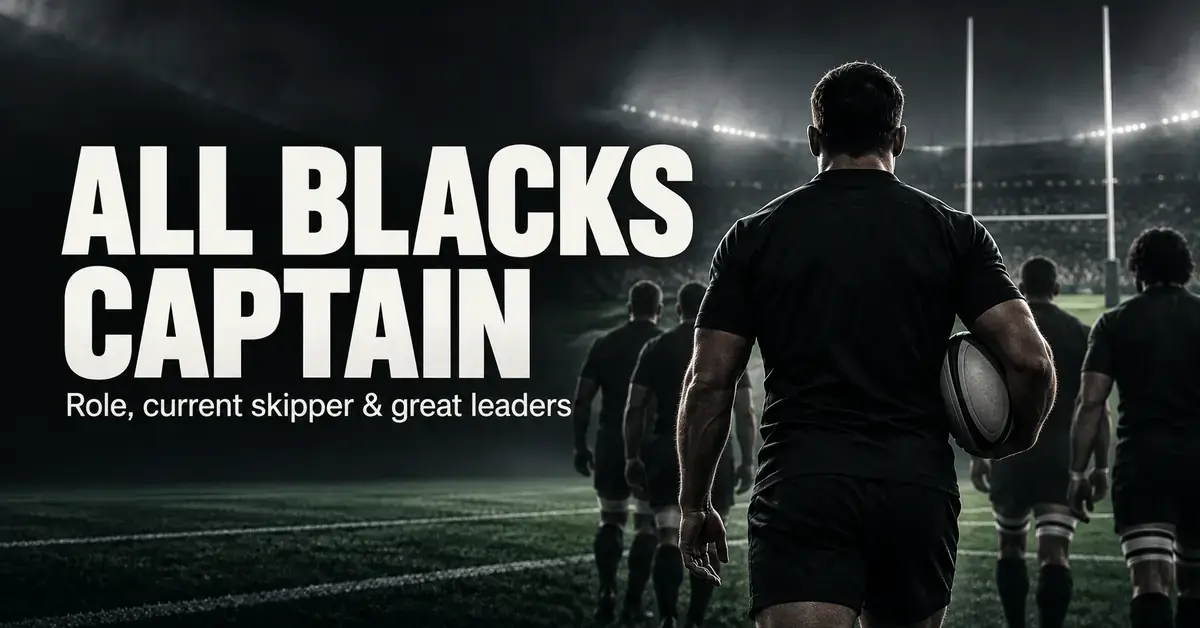
The role of the All Blacks captain is widely considered to be one of the most prestigious, high-pressure, and culturally significant leadership positions in international sport. In Aotearoa New Zealand, rugby union is deeply woven into the national identity, meaning the player who leads the national team carries the aspirations, values, and intense scrutiny of an entire country.

An All Blacks captain must be an absolute master of their physical position on the field, an elite communicator capable of managing complex referee dynamics, and an influential cultural custodian who upholds the mana (prestige) of the black jersey. From the pioneering amateur leaders of the nineteenth century who established the team’s relentless winning culture to the highly professionalised corporate icons of the modern era, this position has consistently demanded an extraordinary level of physical bravery, strategic intelligence, and emotional resilience.

  • National Leadership Status: In New Zealand society, the national rugby captaincy is often viewed with the same level of cultural importance as political leadership.
  • Elite Winning Benchmark: Captains of the New Zealand national side are subjected to unparalleled performance expectations, where winning ratios below 80% spark national debriefs.
  • Cultural Custodianship: The captain bears primary responsibility for leading the squad through historic protocols, including the formal execution of the haka.
  • Tactical Sovereignty: On the grass, the captain maintains ultimate decision-making authority regarding penalty goals, lineout assignments, and live tactical adaptations.

The Historic Foundations of the All Black Captains

To fully comprehend the deep structural weight attached to this role, one must examine the long lineage of the all black captains across the history of the game. Long before rugby union transitioned into a multi-million dollar global professional industry in 1995, early amateur leaders laid down an uncompromised blueprint of self-sacrifice, physical dominance, and tactical innovation. These historical pioneers established a culture where the team identity always took absolute precedence over individual ego. The captain was expected to work a full-time job, maintain peak international fitness without modern sports science, and lead from the absolute front in brutal forward encounters. This historical foundation created a lasting standard where leadership is earned strictly through on-field actions and an unwavering commitment to regional and national communities.

Historical EraPrimary Captaincy StructureKey Leadership RequirementsNotable On-Field Challenge
Amateur Era (1884–1994)Match-by-match or tour selection by a centralized panel.Physical toughness, local provincial standing, and strong tactical knowledge.Navigating long sea voyages, variable local refereeing, and primitive pitches.
Early Professional Era (1995–2003)Full-time appointed captain supported by a senior player leadership group.Media training, corporate sponsorship alignment, and high-performance fitness.Managing rapid defensive line-speed changes and the introduction of the video analysis age.
Modern Professional Era (2004–2026)Decentralized leadership model led by an overall captain and positional directors.Cultural intelligence, biometric workload tracking, and global brand ambassadorship.Navigating dense international calendars, rapid travel schedules, and micro-skills pressure.

The Visionary Leadership of Tom Ellison and Dave Gallaher

The foundational principles of New Zealand’s rugby leadership were largely defined by two extraordinary historical figures: Tom Ellison and Dave Gallaher. Ellison, a brilliant legal mind of Ngāi Tahu descent, captained the first officially sanctioned New Zealand team to tour Australia in 1993, introducing the iconic black jersey with the silver fern and authoring early tactical manuals that revolutionized positional play. A decade later, Dave Gallaher captained the legendary 1905 “Originals” tour of the United Kingdom and North America. Gallaher’s iron discipline, innovative use of the “rover” position, and quiet, uncompromising leadership style established the baseline of excellence that every subsequent captain has been measured against, ensuring that the team was respected as much for their sportsmanship as their clinical efficiency.

  • Tom Ellison’s Cultural Legacy: Formalized the foundational black kit aesthetic and proved the immense strategic value of indigenous tactical thinking.
  • Dave Gallaher’s Iron Discipline: Implemented rigorous training schedules on tour that caught traditional northern hemisphere establishments completely off guard.
  • The Origins of the Shield: Gallaher’s tragic passing at the Battle of Passchendaele during the First World War cemented his status as a national hero, inspiring the creation of the Dave Gallaher Trophy.
  • The Uncompromising Standard: Both pioneers established the core tenet that an All Blacks leader must be the hardest-working player on the pitch at all times.

Comprehensive Chronological All Blacks Captains List

For sports historians, rugby enthusiasts, and analytical punters, reviewing the official all blacks captains list reveals the shifting tactical dynamics and societal changes within New Zealand. The list documents the transition from rugged forward dominance to the hyper-athletic, expansive style that characterizes the modern professional game. Every single entry on this chronological ledger represents an athlete who successfully navigated the intense selection crucibles of New Zealand Rugby, earned the absolute trust of their coaching staff, and demonstrated the capacity to lead their teammates under extreme international pressure.

  • The Selection Crucible: Becoming a test captain requires an unblemished record of high performance across local National Provincial Championship (NPC) and Super Rugby Pacific levels.
  • The Weight of History: Every captain on the list inherits the collective records, trophies, and expectations of over a century of sporting supremacy.
  • Trophy Milestones: The ledger identifies the specific leaders who successfully guided the nation through arduous World Cup campaigns and successful Bledisloe Cup defenses.
  • Positional Diversity: While loose forwards and locks historically dominate the list, visionary halfbacks and hookers have also left indelible marks on the captaincy.

Analyzing the Statistical Giants of the Captaincy Ledger

When we isolate the individuals who have led the team in more than 30 international test matches, we uncover a select group of athletes who redefined the boundaries of sports leadership. These individuals managed to maintain their individual world-class form while simultaneously orchestrating the collective tactical movements of the national side across multiple World Cup cycles. Their longevity in such a physically punishing environment is a testament to their elite conditioning, spatial awareness, and psychological resilience.

Captain NamePrimary EraTotal Test Matches as CaptainWinsLossesCareer Win Percentage (%)
Sir Richie McCaw2004–2015110971188.1%
Kieran Read2012–20195243782.6%
Sean Fitzpatrick1992–19975139976.4%
Sam Cane2015–20232719670.3%
Sir Wayne Shelford1987–19901413092.8%

Detailed Profile of the All Black Captains Last 20 Years

Analyzing the all black captains last 20 years provides a fascinating window into the modern era of hyper-professionalized international rugby. This specific two-decade block, beginning in the mid-2000s, witnessed an unprecedented level of sustained dominance, with New Zealand securing back-to-back World Cup titles and maintaining an iron grip on the trans-Tasman Bledisloe Cup. Under the coaching tenures of Sir Graham Henry, Sir Steve Hansen, Ian Foster, and Scott Robertson, the captaincy evolved from a traditional sole-command model into a sophisticated, corporate-style executive leadership role. Modern captains are tasked with managing immense commercial broadcast obligations, navigating high-stakes social media environments, and leading a diverse, multicultural playing group while maintaining flawless execution on the grass.

  • The Strategic Continuity: The modern era has relied heavily on deliberate succession planning, ensuring that future captains spend years mentoring inside the leadership group before taking the top job.
  • The Media Pressure Cooker: Modern leaders undergo extensive media training to handle sharp sports journalists in rugby-mad centres like Auckland, Wellington, and Christchurch.
  • Biometric Workload Tracking: Captains work in close consultation with high-performance sports scientists to manage their physical fatigue across long international seasons.
  • Sponsorship and Brand Alignment: Modern captains serve as the primary global ambassadors for New Zealand Rugby, requiring an unblemished off-field reputation.

The Historic Mastery of Sir Richie McCaw

The absolute benchmark for modern sporting leadership was established by Sir Richie McCaw, who captained the national side in an astonishing 110 test matches between 2004 and 2015. McCaw, an uncompromising openside flanker from North Otago, led through an unparalleled work rate, consistently throwing his body into the physically punishing breakdown zone to secure crucial turnovers. His captaincy was defined by an ability to remain completely calm and analytical under conditions of extreme physical exhaustion, a trait that allowed the All Blacks to win high-stakes matches in the final ten minutes. McCaw became the first captain in history to lift the William Webb Ellis Cup in consecutive tournaments (2011 and 2015), cementing his legacy as one of the greatest athletes Aotearoa has ever produced.

  • Leading by Physical Example: Maintained an elite standard of fitness, consistently topping the team’s conditioning drills throughout his twelve-year captaincy.
  • Referee Management Diplomacy: Mastered the art of clear, respectful, and authoritative communication with international match officials under intense pressure.
  • Psychological Resilience: Played through severe foot fractures during the grueling 2011 World Cup campaign, refusing to allow personal pain to disrupt the team’s mission.
  • Decentralized Leadership Model: Developed a robust senior leadership group featuring icons like Dan Carter, Keven Mealamu, and Ma’a Nonu to share tactical responsibilities.

Understanding Who Is All Blacks Captain in the Modern Era

For contemporary fans and sports analysts tracking the current international calendar, the question of who is all blacks captain carries immense strategic weight. In the modern professional setup, the selection panel must balance immediate tactical requirements with long-term squad development, especially when navigating a new World Cup cycle. The modern captaincy requires an individual who can command a guaranteed starting spot in their respective position, command the absolute respect of a young, explosive playing group, and execute the highly complex, high-velocity game models implemented by the current coaching staff.

Leadership DesignationCurrent Operational RolePrimary Tactical ResponsibilityImpact on Game Model
Official Team CaptainOverall squad leader and primary on-field decision maker.Orchestrating referee dialogue, executing high-stakes tactical choices, and setting the physical tone.Serves as the emotional anchor, ensuring team cohesion during intense pressure phases.
Vice-Captains / Co-LeadersPositional directors (Forward Pack / Backline leaders).Managing specific set-piece mechanics, defensive screen realignments, and exit strategies.Minimizes the cognitive load on the primary captain, allowing for rapid, accurate operational adjustments.
Emerging Leaders GroupRising provincial and Super Rugby franchise captains.Mentoring younger rookies, managing mid-week training standards, and leading cultural integration.Future-proofs the national setup by building a continuous pipeline of experienced tactical minds.

The Contemporary Captaincy under Scott Robertson

The appointment of Scott Robertson as head coach in 2024 brought a fresh, highly energetic cultural and tactical philosophy to the national setup, directly influencing the choice and management of the team captain. In the current international environment, the captain must be capable of anchoring a highly dynamic, unstructured attacking framework while maintaining an impenetrable, data-driven defensive system. The coaching staff utilizes the captain as a primary conduit to foster a vibrant, family-oriented team environment (whanaungatanga) that strips away individual ego and unites players from rival Super Rugby franchises—including the Blues, Chiefs, Hurricanes, Crusaders, and Highlanders—into a singular, world-class competitive force.

  • Guaranteed Selection Metric: The modern captain must consistently display world-class form within their specific position to justify their place on the team sheet.
  • Dynamic Tactical Adaptability: Expected to alter the team’s kicking and running strategies instantly on the field when faced with innovative northern hemisphere defensive screens.
  • Bridging the Generational Divide: Tasked with integrating tech-savvy, young professional athletes into the traditional, rigorous cultural protocols of the national side.
  • Centralized Communication: Maintains a direct, daily feedback loop with the coaching staff to monitor squad morale, physical recovery, and tactical comprehension.

Tactical Responsibilities: The Captain inside the Referee Circle

One of the most critical, yet frequently misunderstood, dimensions of the captaincy involves managing the relationship with the international match official during a live test match. In the modern game, where rules surrounding the breakdown, tackle height, and deliberate knock-ons are intensely complex, a captain’s ability to communicate effectively with the referee can directly alter the outcome of a match. A great captain does not badger or disrespect the official; instead, they establish a professional, collaborative dialogue, seeking clarity on specific interpretations and subtly influencing the referee’s perceptions of the opponent’s discipline.

  • The Art of the Approach: Approaching the referee with low body language, open hands, and clear, calm vocabulary to minimize defensive tension.
  • Strategic Questioning: Asking for specific feedback regarding breakdown infringements to allow the forward pack to adjust their tackle techniques instantly.
  • Managing Team Discipline: Actively reprimanding teammates who display poor discipline on the pitch to demonstrate accountability to the official.
  • The TMO Review Balance: Knowing precisely when to request a formal review of a controversial incident without disrupting the natural flow and momentum of the match.

The High-Stakes Choice Between Points and Touch

During a high-pressure test match against a fierce tier-one rival like South Africa, Australia, or Ireland, the captain is regularly faced with a defining tactical choice when awarded a penalty inside the opponent’s half: point to the posts for a three-point kick, or kick for the corner touchline to launch a five-point driving maul attack. This decision cannot be pre-programmed by the coaching staff; it requires the captain to read the immediate psychological state of both teams, analyze shifting weather conditions, and evaluate the current efficiency of their set-piece lineout. Making the wrong choice can instantly kill a team’s attacking momentum and swing public momentum against the leadership group. Wikipedia

Tactical ScenarioCaptain’s ChoicePrimary Strategic JustificationPotential Operational Risk
Trailing by 2 points with 5 minutes remaining.Kick for the three-point penalty goal.Secures a reliable, high-percentage lead, putting the immediate pressure back on the opponent.If the kicker misses, the team surrenders territorial advantage and vital clock minutes.
Dominating the scrum but facing a rigid defensive screen.Kick for the corner touchline (Lineout).Aims to break the opponent’s emotional resolve through a physical, low-structured driving maul.A handling error or turnover at the lineout allows the opponent to clear their line easily.
Opening 10 minutes of an intense away test match.Take the early three points on offer.Settles team nerves, scoreboard pressure, and validates early territorial dominance.Passes up an early opportunity to test the opponent’s defensive resolve inside their own 22-metre zone.

The Cultural Custodianship of the Black Jersey

Beyond the technical and physical demands of rugby union, an All Blacks captain operates as a premier cultural statesman for Aotearoa New Zealand. The national side serves as a primary vehicle for showcasing the country’s unique bi-cultural identity on the global stage, meaning the captain must possess a high degree of cultural intelligence. Working alongside specialized Māori cultural advisors and tribal elders, the captain ensures that te ao Māori (the Māori world) is authentically embedded into the team’s daily environment, training schedules, and overseas touring protocols.

  • Leading the Haka Challenge: The captain stands at the apex of the team’s pre-match challenges, orchestrating the performance of “Ka Mate” or “Kapa o Pango” with absolute precision.
  • Upholding the Mana: Responsible for ensuring that all squad members treat match jerseys, training grounds, and local hosting communities with ultimate respect.
  • Embracing Whanaungatanga: Fostering an inclusive, family-centric internal environment where younger rookies feel safe to explore and express their personal heritage.
  • International Diplomacy: Representing New Zealand at formal civic receptions and cross-cultural exchanges during major end-of-year tours to Europe and Japan.

Revitalizing the Authenticity of the Haka under Buck Shelford

A pivotal moment in the cultural history of the captaincy occurred during the late 1980s under the leadership of the legendary Sir Wayne “Buck” Shelford. Prior to his appointment, the execution of the pre-match haka had occasionally degenerated into an uncoordinated, theatrical display that lacked genuine cultural depth. Shelford, an uncompromising number eight with a deep pride in his Māori heritage, challenged the playing group to study the precise history, vocabulary, and physical mechanics of the challenge. Under his leadership, the squad transformed the haka into the ferocious, unified, and deeply authentic expression of national defiance that we see today, establishing a permanent requirement that all future captains must treat the protocol with absolute reverence.

  • The 1987 Revolution: Shelford integrated formal training sessions into the test-week schedule to practice the correct vocalizations and stamping rhythms.
  • Unifying the Playing Group: Proved that a deep connection to indigenous customs could serve as the primary source of the team’s on-field emotional strength.
  • The Unbeaten Streak: Shelford’s captaincy was defined by an extraordinary unbeaten run in test matches, a record heavily fueled by the fierce team unity he cultivated.
  • A Lasting Legacy: Every modern leader, regardless of their personal ethnic background, operates directly under the cultural benchmarks established by Shelford.

Iconic Captaincy Rivalries Across the Tasman

The intense, century-old rivalry between the New Zealand All Blacks and the Australian Wallabies for the silver Bledisloe Cup has been heavily shaped by some of the most compelling captaincy duels in international sports history. These head-to-head battles feature contrasting leadership styles, brilliant tactical chess matches from the coaching boxes, and immense psychological warfare played out across the major sporting arenas of Oceania. For an All Blacks captain, maintaining possession of the Bledisloe Cup is treated as a non-negotiable professional requirement; dropping the trophy to Australia is considered an unacceptable stain on a leadership legacy.

  • The Battle of the Halfbacks: The explosive, highly vocal tactical duels between New Zealand’s Justin Marshall and Australia’s George Gregan during the early professional era.
  • The Elegant Lock vs. The punisher: The fascinating contrast between Australia’s intellectual captain John Eales and New Zealand’s rugged, physical forward leaders of the 1990s.
  • The Flanker Warfare: The relentless, high-stakes breakdown battles between Richie McCaw and various Australian loose forward captains across a decade of dominance.
  • Fort Eden Park: Captains utilize the historic unbeaten record at Auckland’s Eden Park as a powerful psychological weapon when hosting the Wallabies in a series decider.

John Eales vs. Sean Fitzpatrick: A Clash of Ideologies

The mid-1990s witnessed an epic captaincy rivalry between Wallabies lock John Eales and All Blacks hooker Sean Fitzpatrick. Fitzpatrick was a master of psychological pressure, an uncompromising competitor who utilized aggressive verbal communication and relentless physical intimidation to fracture the opponent’s focus. Eales, conversely, was an elegant, unflappable athlete known affectionately as “Nobody” (because nobody’s perfect), who led through clinical technical execution and an icy composure that kept the Wallabies highly disciplined under immense pressure. Their tactical confrontations across multiple Tri-Nations campaigns captured the imagination of sports fans across both countries, demonstrating that there are multiple distinct pathways to achieving ultimate leadership success on the international stage.

Captain AttributeSean Fitzpatrick (New Zealand)John Eales (Australia)Leadership Impact on Series
Primary On-Field StyleAggressive, confrontational, and highly physical inside the front row trenches.Technical, elegant, and highly versatile across the lineout and kicking phases.Created an intense, high-contrast spectacle that elevated the tactical demands of trans-Tasman rugby.
Media & Public PersonaFierce, intensely protective of the team bubble, and media-savvy.Statesmanlike, academic, and universally respected across both sporting nations.Transformed the international test week into a highly engaging clash of national identities.
Referee ManagementHigh-pressure, relentless dialogue designed to test the official’s psychological boundaries.Calm, analytical, and highly structured, relying on rules and formal interpretations.Forced international rugby unions to refine and standardize referee communication regulations.

The Strategic Pipeline: Nurturing Future All Blacks Leaders

From a long-term governance perspective, New Zealand Rugby realizes that sustaining the elite standard of the national side requires a continuous, highly robust pipeline of world-class leadership talent. Just as selectors carefully track the technical passing and tackling completion percentages of rising stars, high-performance managers systematically evaluate the psychological maturity and communication skills of young captains working across the local National Provincial Championship (NPC) and Super Rugby Pacific franchises. This comprehensive incubator ensures that when the national captaincy inevitably changes hands, the incoming leader has already accumulated years of high-stakes captaincy property.

  • The Franchise Academy Proving Grounds: Super Rugby franchises—such as the Crusaders or Blues—serve as the primary laboratory for young athletes to develop their captaincy mechanics.
  • The Under-20 Transition: Future test captains are frequently identified early during international campaigns with the New Zealand Under-20 developmental side.
  • The Leadership Group Integration: Promising young players are deliberately introduced into the national squad’s senior steering committee to observe veteran captains first-hand.
  • Corporate Mentorship Programs: New Zealand Rugby provides rising leaders with executive communication and sports psychology support to future-proof their careers.

Transitioning from Franchise Captain to National Leader

The historical records indicate that a successful championship-winning tenure at the Super Rugby level is almost a mandatory prerequisite for assuming the national captaincy. Leading a local franchise forces an athlete to develop highly sophisticated game management models, manage intense corporate stakeholder relationships, and navigate rapid, cross-border travel schedules. A player who can successfully guide a team like the Chiefs or the Hurricanes through the high-stakes pressure of a Super Rugby playoff series has demonstrated the baseline operational capability required to step up into the ultimate pressure cooker of the international test match box.

Rising Leader NameSuper Rugby FranchiseLeadership Breakthrough CampaignCore Management Strength
Scott BarrettCrusadersLed the franchise through multiple intense championship-winning playoff series.Uncompromising physical presence combined with a calm, data-driven approach to set-piece management.
Ardie SaveaHurricanesCaptained both his franchise and the national side during crucial international absences.Relentless, explosive work rate that inspires immediate emotional lift across the entire playing group.
Dalton Papali’iBluesGuided the Auckland-based franchise through highly competitive domestic and cross-border campaigns.Elite defensive communication and a disciplined, structured approach to breakdown management.

Governance, Hardship, and the Welfare of the Leader

The immense, unceasing public pressure attached to the captaincy means that New Zealand Rugby governance must place a supreme premium on player welfare and mental health support systems. In the modern era, where unfiltered fan commentary on digital media and round-the-clock sports networks scrutinize every tactical misstep or drop in form, the cognitive load on a captain can become completely overwhelming. High-performance managers work tightly with professional player associations to ensure that leaders have access to comprehensive psychological buffers, structured rest windows, and clear protocols to manage team adversity or a rare string of test match defeats.

  • The Formal Support Bubble: Providing full-time sports psychologists inside the team camp to help the captain process external media noise.
  • The Sabbatical Rest Strategy: New Zealand Rugby strategically utilizes short-term contractual sabbaticals to allow senior leaders to rest their bodies and minds overseas.
  • Hardship Protocols: Clear institutional support mechanisms to guide a captain through periods of severe long-term physical injury or form slumps.
  • Protecting the Personal Life: Establishing strict boundaries around team hotels and family spaces during dense international touring windows to ensure private recovery time.

Standing Strong Against Public and Institutional Adversity

The narrative of New Zealand’s rugby captaincy is not merely a record of unbroken athletic triumph; it is also marked by periods of profound institutional adversity, political compromise, and public heartbreak. True leadership capability is never validated when a team is winning by forty points on a sunny afternoon at Eden Park; it is forged when the squad is facing a severe injury crisis, navigating a painful string of losses, or enduring intense media criticism from millions of selective selectors across the country. The captains who achieved legendary status were those capable of standing tall in the face of public storms, taking absolute responsibility for team failures, and protecting their younger teammates from external condemnation.

High-Pressure ChallengeMedia & Public ReactionCaptain’s Counter-Strategy & Operational Response
Rare loss of a home test match or traditional shield.Outcry across local networks, with demands for instant coaching and captaincy overhauls.Front the press conferences with absolute candor, refuse to blame individuals, and focus on immediate video review data.
Severe physical injury to a key playmaking teammate.Widespread panic regarding the team’s tactical viability heading into a major series.Instantly elevate and empower the vice-captains group to re-distribute positional leadership roles.
Controversial on-field disciplinary card or referee decision.Intense debate regarding team discipline and tactical maturity under international pressure.Maintain strict internal alignment inside the team bubble, accept the judicial ruling, and adjust technical tackling drills.

Summary

The position of the All Blacks captain stands as one of the most magnificent, living monuments to the power of structured high-performance leadership, strategic continuity, and profound cultural alignment in the global sporting landscape. Through over a century of grueling forward encounters, spectacular last-minute triumphs, and heart-wrenching international campaigns, the individuals who have worn the captain’s armband have constructed a legacy of excellence that is universally respected across the global rugby community.

By successfully anchoring their modern professional setups to the deep historical traditions of New Zealand Rugby and the vibrant cultural values of te ao Māori, these elite leaders have ensured that the team remains far more than a standard commercial entertainment property. As international rugby continues to face rapid technological changes, tactical revolutions, and shifting global schedules, the architectural minds leading the All Blacks from the center of the grass remain completely committed to upholding the elite standards of dignity, bravery, and brilliance that have defined the silver fern for generations to come.

FAQ

Who is the longest-serving captain in the history of the All Blacks?

Sir Richie McCaw holds the undisputed international record for captaining the national side in the greatest number of test matches, leading the team in an astonishing 110 fixtures between 2004 and 2015 while achieving a historic 88% career winning ratio.

What are the main eligibility rules to become an All Blacks captain?

To be eligible for the captaincy, an athlete must fully satisfy the global eligibility parameters established by World Rugby—including national citizenship or strict residency rules—and must hold a full-time professional contract with New Zealand Rugby, typically playing for a local Super Rugby Pacific franchise.

How does the coaching staff select the national team captain?

The selection of the captain is handled by the head coach in close consultation with the national selection panel and New Zealand Rugby high-performance executives, evaluating individual world-class form, psychological resilience, tactical intelligence, and cultural leadership capability.

What unique haka does the team captain lead before a test match?

The captain or a designated senior cultural leader within the squad orchestrates the performance of either the world-famous traditional challenge “Ka Mate” or the powerful modern composition “Kapa o Pango,” which was written specifically for the national team to celebrate the silver fern.

Which players feature prominently on the all black captains last 20 years list?

The last two decades of international performance have been structurally anchored by an elite group of core leaders, most notably Sir Richie McCaw, Kieran Read, Sam Cane, Ardie Savea, and Scott Barrett, who assumed leadership roles within the modern setup.

What happens if the primary captain is injured during an international tour?

If the official team captain suffers a physical injury, leadership responsibilities are instantly assumed by the pre-appointed vice-captains or co-leaders within the squad’s senior leadership group, ensuring complete tactical and behavioral continuity.

How does the captain manage communication with international referees?

The captain establishes a professional, non-confrontational dialogue with the match official, utilizing low body language and precise, rule-based vocabulary to seek technical clarity regarding breakdown or set-piece interpretations without disrupting match momentum.

Does the captain have the final say on match day tactical decisions?

Yes, while comprehensive game models and exit strategies are meticulously designed by the coaching staff during the week, the captain retains absolute autonomous sovereignty on the grass to make live adjustments regarding penalty shots, lineout calls, and substitutions.

How are future captains developed within the New Zealand rugby pipeline?

New Zealand Rugby operates a centralized leadership pipeline, systematically monitoring the communication skills and psychological maturity of rising talent within the Under-20 squads, regional National Provincial Championship (NPC) teams, and Super Rugby Pacific franchises.

Where can fans view the official all blacks captains list and historical records?

The complete, audited historical archive detailing every single player who has captained the national side since 1884, alongside comprehensive win-loss statistics, is maintained and updated via the official New Zealand Rugby digital portals and historic club databases.